
“How do you want to be remembered after you die?”
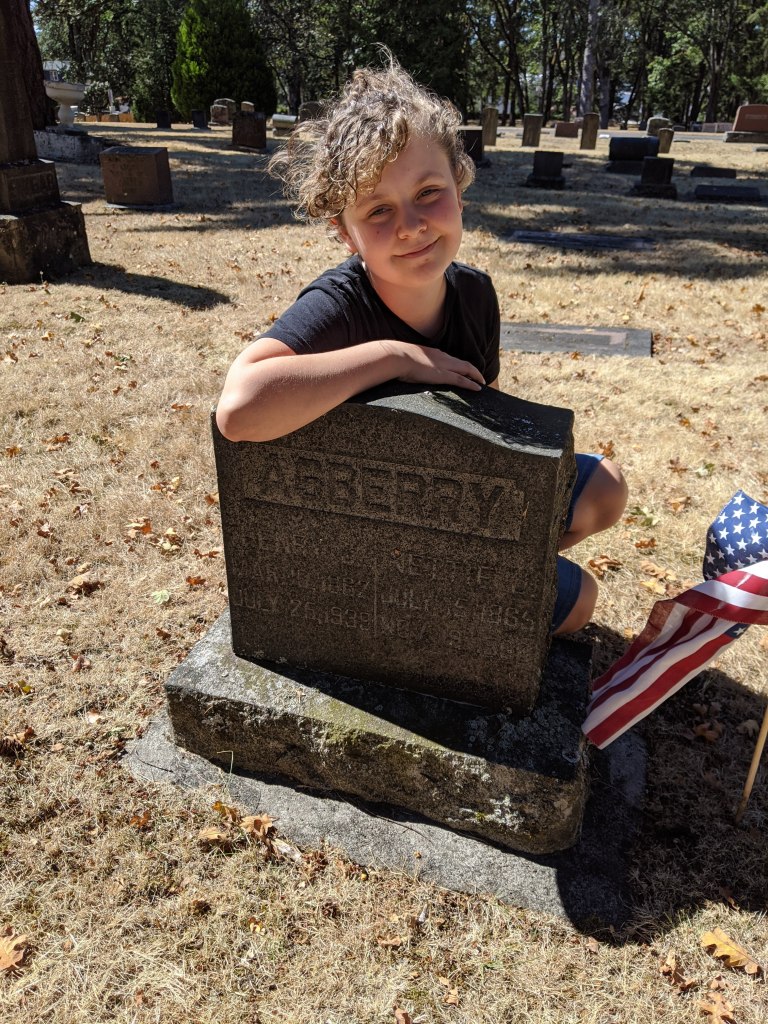
My daughter paused and posed to me before climbing back into the car. Expectant eyes fixed on me, ready to record whatever happened next for posterity. I had just stood beside her and eulogized at the grave of one of the most impressive and accomplished women to have lived west of the Mississippi in the twentieth century. Founder of the ACLU in Washington, a suffragist pioneer and prodigy in music and politics; the portrait of a strong black woman who shattered every convention at the turn of the century. An impossible act to follow. I don’t know … I stammered, and the exact framing of my response is lost to my recollection, as I blacked-out. Pressed beneath the gravity of it. I mumbled something to the affect of wanting to be remembered for celebrating women, for educating people and blah blah blah.
Visibly underwhelmed, she granted me a pitiful smile before climbing back into the minivan. The truth that I couldn’t admit to a twelve-year-old was my greatest fear; that she would not proud of me after I’m gone. I don’t want the memory of being their mother to be the only story my children can tell. I want a life that will leave behind a legacy for them to inherit.
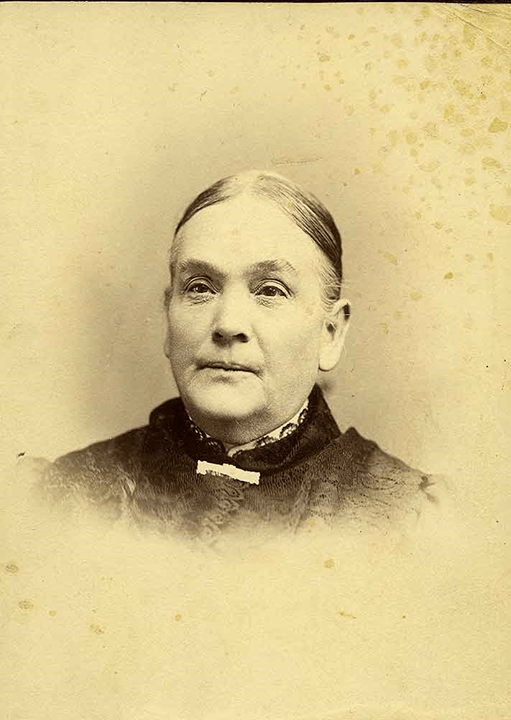
A life and legacy like the one that belongs to Mary Olney Brown.
Finding Mary’s grave required we trespass onto private property. Unlike the other sixteen women buried in Thurston County, Mary Olney Brown’s site was located in a derelict cemetery hidden away on what appeared to be a rundown, clandestine religious compound. For this excursion, I left my long suffering children at home to enjoy their weekend without the oppressing reminder that everyone dies. My best friend, Brienne, flew from Salt Lake City to Seattle to accompany me on this, the most ambitious weekend of my months-long project. Riding along as passenger and copilot, I wondered whether she was beginning to wish she hadn’t come. We had guessed wrong twice before finally making the correct turn onto a narrow, steep driveway off of the highway. We climbed up a hill onto a road that greeted us with a foreboding sign that declared “NO TRESPASSING: Private Property”, which I ignored. We were on a sacred errand.
It was in the weeks leading up to the centennial of women’s suffrage that I set out to mark as many gravesites of suffragists as I could. In my preliminary research, I knew that Mary’s was among the most significant and that the project would be incomplete without driving a marker down and paying my respects. The idea was to draw attention and guide people to do the same, but I knew no one would ever dare come close enough to visit Mary.
A large grey pitbull stood in the middle of the road. As I slowed down, it postured itself, pacing a boundary ahead of us as we drew closer. It had been raining off and on all morning, and the grey skies invited a caution that settled in as we passed the guard dog, who trotted alongside the grey honda fit I’d borrowed for the weekend. It was clear that we needed permission to leave the car – someone to take ownership of this dog and grant us entry onto the property. Two men came out of a long, beige building with brown window frames and doorways. The first man, hooded in a grey sweatshirt, sauntered alongside a tall, older man with sandy hair who took the lead. He looked like a pastor – clean-cut and authoritative but without the hallmark disarming smile. The hooded young man with disheveled facial hair took control of the dog while the other approached us to inquire further.
I rolled down the passenger side window and leaned over my friend who had fixed her gaze forward. “Hello – sorry to bother you… I am part of the Washington State Historical Society’s Suffrage Centennial Committee” – that was a lie. I had found that freelance, history fangirls on personal crusades had much fewer doors opened to them, so I took a few liberties. I was inspired by the committee’s plans for the centennial. When the pandemic interrupted everything, I decided to do what I could on my own.
“We are going around to historic burial sites and marking those belonging to Washington Suffragists in the lead-up to election day – do you know that you have a suffragist buried here?”
He did not. He seemed only mildly more at ease after my explanation. Washington, I had found in my six years living there, has a unique preoccupation with privacy. The only state to have specified the right to privacy in its constitution at the time it was written. Privacy is a regional luxury embedded in the dense trees and vegetation. It is easy to carve out a hiding place and keep secrets out of plain sight.
“So, what is it you’re doing exactly?” He pressed, leaning in closer to the passenger window, Brienne growing visibly more uncomfortable as the interrogation continued. “We are just trying to educate people about these suffrage pioneers and where they are located so that if they choose, they could …” I saw a sudden change in the man at the prospect of more trespassers. “But no one is likely to follow us here – we could hardly find it ourselves, This is mostly for the pictures. Share their stories on the socials and such.”
He was skeptical, “Well, you can try. I doubt that there is much in there to find, tell the truth.”
I asked no questions, other than he point us in the direction where the cemetery was located. He motioned to a grove of trees behind a grey, prefab rambler with signs of children littered about the yard. There was less danger with children nearby. I parked the car to the side of the home.
We marched through a marsh of mud and grass until we found ourselves under a rusted metal archway. In large block letters “MCLANE” declared we had found the cemetery. No reverent architecture or embellishments that made spaces like these more inviting. It felt small, with size difficult to gage as the overgrowth had boxed us in. Only fragments of headstones remained, scattered in the tiny clearing. The place had been neglected, vandalized, forfeit to the elements that had slowly reclaimed it over the past two decades. The nearby church established itself with the permission of the McLane descendants, but we were being watched as if the access we were granted posed a threat. We had to make our visit brief.
“It’s raining, it’s spooky, and this place is definitely haunted,” I narrated as Brienne marched ahead into the overgrowth, outlining a vague path in her wake as I wrestled my umbrella from the branches. I could see the outline of her ahead thanks to the pumpkin orange sweater she bought the day before. I emerged from the viel of vines and branches to find her standing beside a gaggle of headstones. “I found some here -”
She paused. With a start, she turned and moved back in my direction, shaking her head. “I heard a growl.”
“What, like a dog?” I thought of where the one from before was likely to be and imagined it impossible that it could be that far opposite where we had last seen it. I laughed nervously. “Should we find two sticks? Click them together or something?”
“It was a male voice.” She returned, unamused. Her belief in the paranormal was one of the things I loved about her. I played ghosts with her, but for me, it was only a game.
“OK. Here, you give me that.” I motioned for her to hand me Mary’s sign. “You hold my phone for a second.” It had been recording our misadventure from the moment we discovered the McClane signpost. Brienne filmed, following dutifully behind as I tiptoed ahead, noting sporadic stones as we passed. I had seen cemeteries that had fallen into neglect – one in Tacoma was fenced within chainlink behind a lovely, manicured field with green grass and a church. Contrasted directly beside a treeless lot of scorched grass and sand. Sparse, crooked headstones several yards from one another. Signaling the poor people of color who had been buried in unmarked graves. These graves at McClane were not only abandoned on neglected grounds, but the stones themselves had been intentionally abused and broken by intention. One of them in a clearing belonging to Mary O.
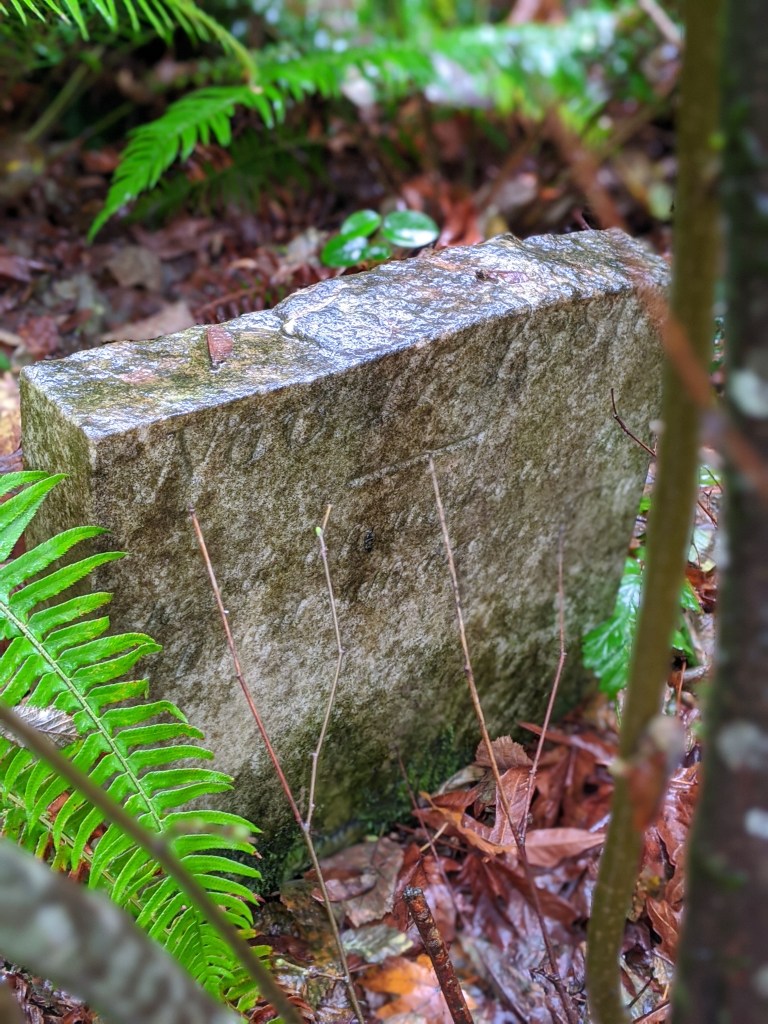
The original settlers, William and Martha McLane, built a school and an Indian Shaker Church on that site overlooking Mud Bay. The cemetery was designated for their family and anyone else who wished to be buried there. “Free to all without reference to color or creed.” So much is implied by the state of their final resting place 125 years later – the passage of time coupled with the diminishing regard and reverence for the human artifacts entombed below.
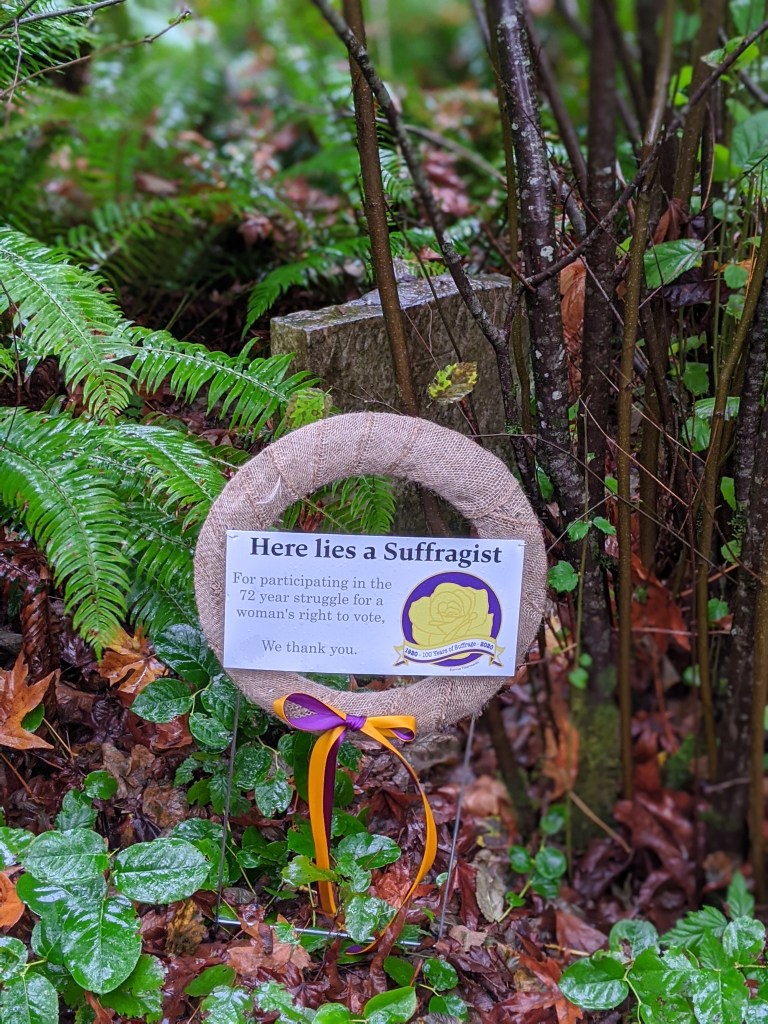
“I think it’s this one over here.” Brienne had located the stone off on its own, isolated and angled inward toward the others. She stood back and watched our perimeter while I moved closer to confirm. She looked down to note a jagged headstone protruding from the ground on her right side, threatening her like a blade. The stone was a match with what I had seen online. The rain began to hammer down harder, reminding me to wrap things up. The portion that had her name engraved had been snapped off and taken – all that remained was:
November 17, 1886
——
She was a faithful advocate
Of Equal Suffrage for women
The lighting for photos was perfect, the stone was a centerpiece accented by dark green fern on all sides. I struggled to place the sign, the wreath slipping down the metal posts each time I applied pressure into the ground. To draw attention from the silence and my clumsy passes, I asked Brienne about the sound she had heard. “It could have been an animal – I don’t know … They don’t seem to get many visitors around here, it’s a little disconcerting,” she conceded in understatement. With the sign in place, I stood back and documented the discovery with my phone. We left McLane quickly, skating back down the hill. The eerie impression of the place lingering on as we checked the final name from our list and started the return north.
Sources:
“McClane Cemetery” https://www.findagrave.com/cemetery/2333354/mclane-cemetery
“Mary Olney Brown” Find a Grave website, https://www.findagrave.com/memorial/63326813/mary-brown
 Historianne