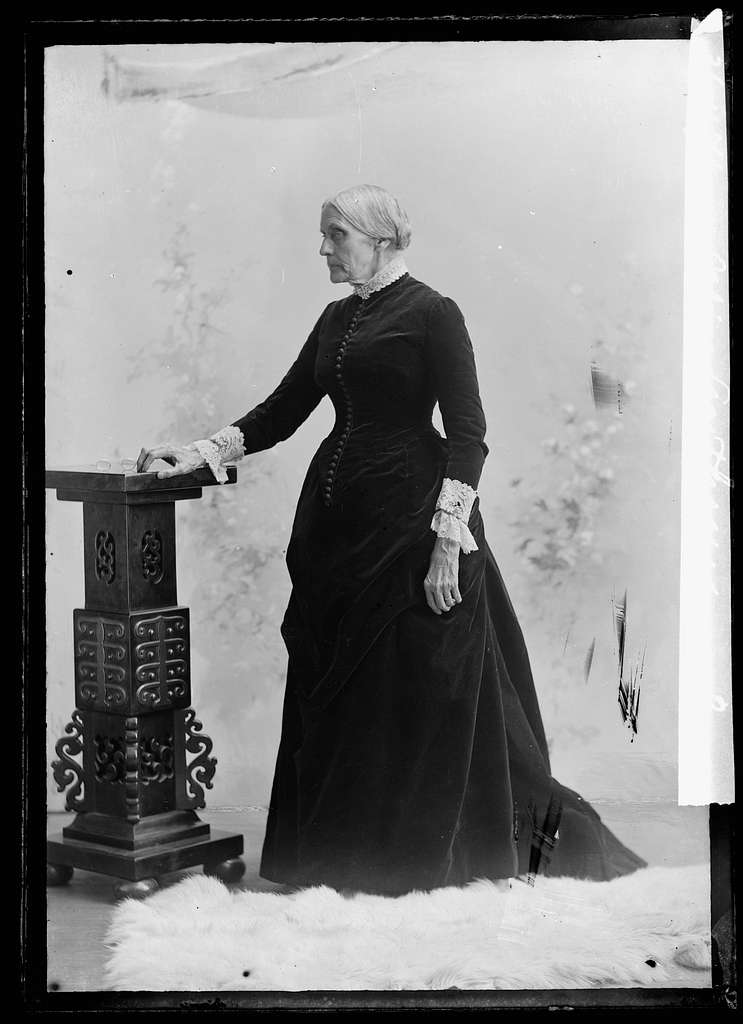
In her official capacity as President of the Suffrage Club in Olympia, Mrs. Mary Olney Brown accompanied Susan B. Anthony to Seattle that All Hallows Eve. Mrs. Abigail Scott Duniway of the regional suffrage publication, The New Northwest, sent her husband along to ensure their safety. Anthony had been invited to address the territorial legislature in Olympia, which had been locked in a debate over “The Woman Question”. Representatives Arthur A. Denny of Seattle and Edward Eldride of Bellingham raised the question nearly two decades before in 1854; entreating the assembly of the newly incorporated territory to take up the cause of equal suffrage. Now as Speaker of the House, Eldridge continued their crusade. Successful in negotiating that the words “he” be removed from the description of a citizen – Eldridge opened the field for suffragettes to harvest. To attempt to vote in the coming election. Women were intimidated from making the attempt, with the exception of the two incidents mentioned, those who persisted were denied – subjected to public ridicule and humiliation. When the body reconvened, It was decided that the “renowned advocate of universal suffrage and temperance reform” ought to be acknowledged and allowed to speak to the legislature on the subject.
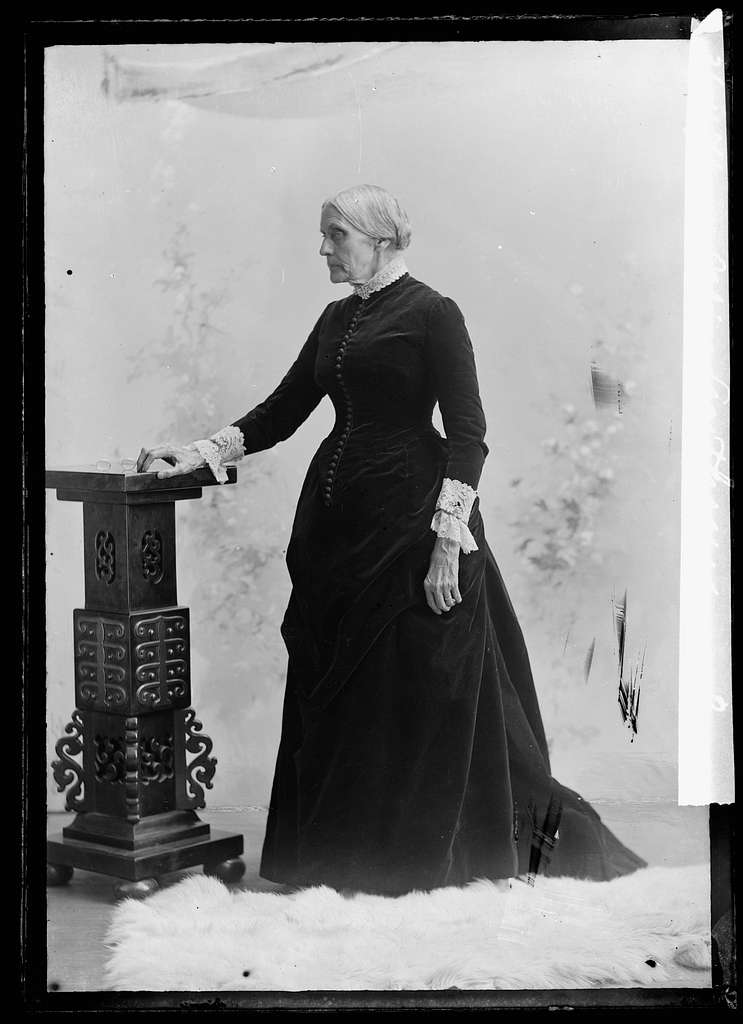
Ms. Anthony had never before been given such an opportunity to speak before a legislature – in fact, never before in the nation’s history had a women been permitted to address a sitting congress. With the stakes and the significance of the engagement settling on her shoulders, Anthony approached the rostrum at 2pm on October 19, 1871 to speak. Those in support were flummoxed when Anthony proceeded to disagree with the proposed law for women’s suffrage. To merely introduce the word “women” in the description of a citizen, she claimed, was simply redundant. They were merely “tinkering” with the verbage of the nation’s founding documents, which she clarified, already subscribed women to full citizenship. It was men’s interpretation of the term that was the issue at hand. Self-evident, she emphasized – her thorough understanding of constitutional law on fully display before a room of men, many of whom had received an education that day.
“If only ‘he’ is regarded as a citizen, then laws imposing penalties and levying taxes should only apply to men,” she reprimanded, citing specific provisions from amendments made to the Constitution. The spectacle of a woman, instructing a room of men on the error and tyranny of governing without the inclusion of her sex, commanded the attention of the nation. The chamber was filled to capacity that afternoon. Newspapers reported that her words and demeanor made a commanding impression. Anthony herself reflected on the appearance favorably in her brief and, often hastily written diary that chronicled her 2,000 mile odessey across Oregon and Washington. After the conclusion of her remarks, women from all over were permitted to stay and observe the sessions. The same company of women attended every session in earnest. A rumor had begun to circulate that a measure to suspend their rights seemed imminent. They watched from the balcony for any slight-of-hand that they could later cite as evidence for the injustice. When told to go home, they refused until the session officially adjourned and the final blow was dealt.
“No female should have the right of ballot, or vote at any poll or election precinct in this territory until the Congress of the United States of America shall, by direct legislation declare the same to be the Supreme Law of the Land.”
Anthony was not surprised and did not take setbacks like this one personally. She was under no impression that the victory would be swift. Her stoic demeanor had become chisled and polished by each public dismissal. Each host municipality cordially extended a platform, only to usher her aside and issue a blunt but polite refusal, having done their due diligence. Flagrantly denying the same arguments upon which these governing bodies were founded. She brushed herself off and carried on to the next, without so much as a stutter in her step.
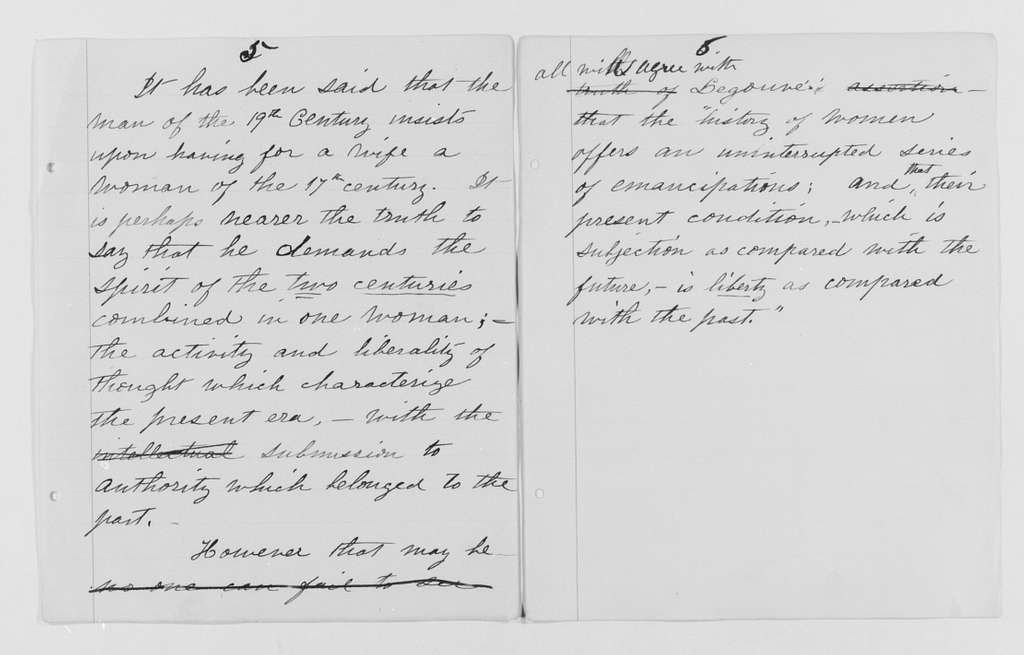
Only when she had an unsettling encounter of a more personal nature was she prone to pause and reflect on the true cost of these stolen resolutions. Such was the case in Port Gamble earlier that month. From the Pacific Ocean, channeled through the Straight of Juan de Fuca, sits Port Gamble on the western side of the Olympic peninsula, just five miles from the mouth of Hood Canal. The milltown was a waypoint between Seattle and Port Ludlow and where Anthony had hoped to influence Representative Garfield; a legilsator drifting in the margins of the suffrage issue. Anthony and her traveling companion arrived in Port Gamble at 9am and soon after, met a lovely woman named Mrs. Seany. She was eager to make Ms. Anthony’s acquaintance. Mrs. Seany insisted they come to her home; “she had a nice new house and did everything per our comfort,” Anthony mused. When Mr. Seany arrived home, his deep dissatisfaction with his wife and her guest was immediately apparent. We are not running a hotel he made plain to the newcomers, and my wife has no right to invite you here. The matter was settled. Mrs. Seany promptly complied, ushering them from her home, whispering apologies as they went.
They checked into the Miller Hotel and later that night, Anthony addressed a small audience, with Rep. Garfield offering her introduction. The crowd was “generally cold and disagreeable” and Garfield was stodgy, claiming he hadn’t “thought upon the question facing the women’s bill.” A matter she planned to rectify with her appearance before the legislature. Given the mounting aspects of her unflattering impressions of Port Gamble, the incident of the chastened housewife was the thing that wouldn’t be unburdened from her mind. The following morning, Anthony was ready to depart when Mrs. Seany called on her to once again. Pleading for forgiveness from the icon who had witnessed her become the shrinking woman. Contradicting all that Anthony had dedicated her life to achieve. The affront cast such a shadow over Anthony’s perception of the women that she refused to see her. “[I] can’t get over a woman’s inviting guests then so willingly allows them to be sent off by her husband.” Anthony regarded the insult to be an indication of a woman’s weak of character rather than an exhibition of tyranny in the home. The hostile nature of a marriage where an imbalance of power was secured by the husband’s heavy hand.
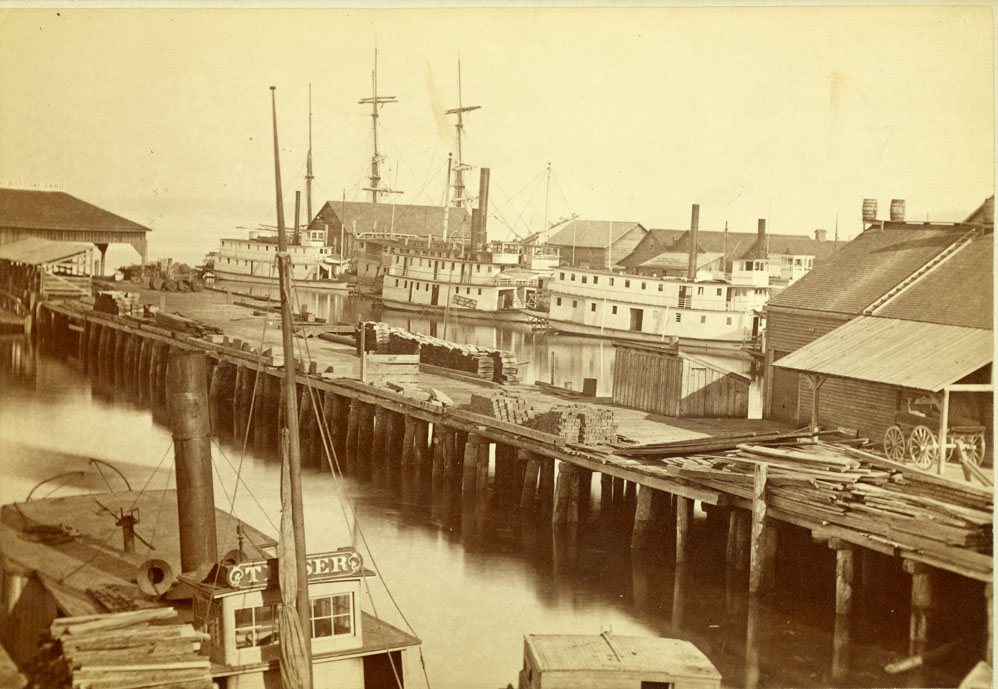
Arriving in Seattle, Mary Olney Brown and Mr. Duniway bid farewell and returned home the following day after delivering Miss Anthony to the Occidental Hotel. In the coming days, she was inundated with calls from the wives and sisters of aquaintances and affluent ladies in society. Mrs. Sarah Yesler, who was president of Seattle’s suffrage club, invited Anthony to dinner in her grand, six bedroom home that her husband built for her. Henry Yesler established the town’s lumber mill which, overtime, made the couple very wealthy and influential. Having discovered that Henry had fathered a child with a local Duwamish woman named Susan (with whom he maintained a relationship), Sarah was welcome to entertain and do whatever she wished. In the evenings, Anthony delivered her speeches to large audiences that somehow found their way inside Reverend Bagley’s Little Brown Church on 2nd Ave and Madison; a guard posted at the door to disuade any who might hope to derail her engagements.
Commanding and poised at the alter of the packed parish, Susan B. Anthony set the scene. Illuminating provocative anecdotes, agitating the righteous indignation of women who could relate the the injustices she described. She related the tale of one metropolitan center somewhere in Washington, that advertised for principals for the common schools.
“In response to which several applications were made by women, who were refused positions although amply qualified to discharge the duties, simply because they were women […] in another instance wherein the salaries of a number of lady teachers were reduced, though already lower than those of the male teachers, to increase the salaries of the men. As amusing as it is infuriating, the same principal that was hired was also authorized to pass upon the qualifications of teachers in the same common school. He had to employ a lady school teacher to examine the applicants and signed his name with an “X” when the certificate was written out by his assistant. But it excited no comment, for the authority was held by a man, even if he did avail himself of the use of women’s brains to extricate himself from a dilemma. He could vote, and exercise influence at ward meetings, and this covered all the defects of intellect or education.”
The thrill of hearing Ms. Anthony, the intrepid and fearless reformer, immasculating powerful men, armed the women of Seattle with an appetite for restitution. Though the machinery of the movement was mainly concentrated in the east, demands for leadership and guidance pulled Anthony abroad as more territories used progressive platforms to entice female migration westward. Anthony and her comrade in aims, Elizabeth Cady Stanton, made increasingly frequent trips, giving their ideas opprtunity to take root in furtile frontier soil.
The Winsor family were regular attendants of the Little Brown Church. The matron, Francis Cornish Winsor, hailed from an upstate town just outside of Seneca Falls in Coventry, New York. It is very likely she sat with her two daughters, now grown, in the pues of the church on an evening Susan B. Anthony made her appearance. Minnie, the eldest daughter, was married with an infant daughter of her own. The youngest Winsor daughter, Agnes, was seventeen. Employed as a teacher in the common schools like the ones Ms. Anthony described.
To be continued …
Sources:
Governor Edward S. Solomon, Nov. 29, 1871, “Woman Suffrage” Washington Standard (Olympia, WA), October 21, 1871, Susan B. Anthony Journal, September – November 1871, Mildred Andrews, “Susan B. Anthony addresses territorial legislature on October 19, 1871, then helps found Washington Woman Suffrage Association.” https://www.historylink.org/File/5557
 Historianne