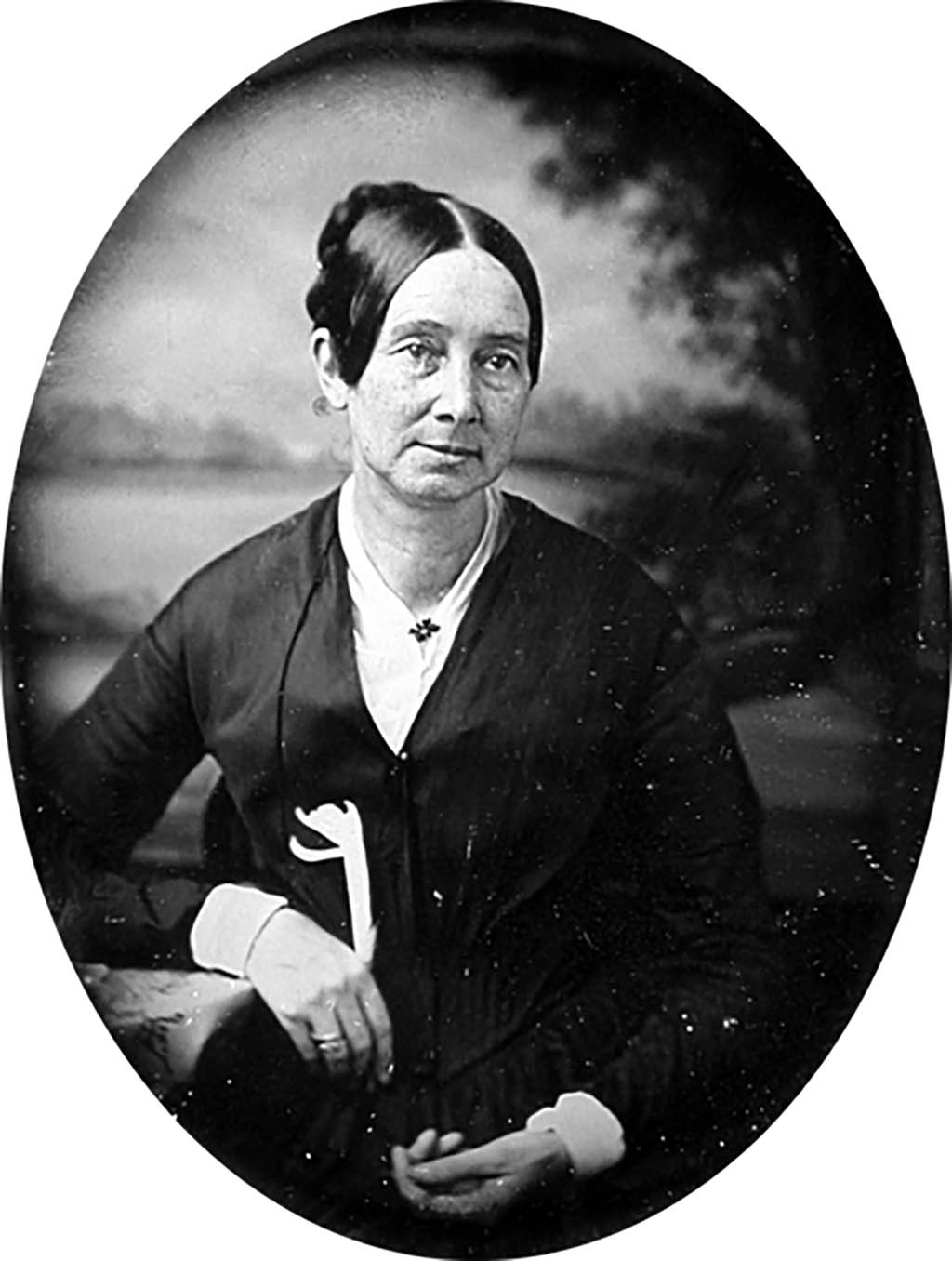
Olympia, Washington – November 9, 2023
“Are you keeping track of what goes where?” The senior archivist inquired rhetorically in a stern tone. She stared at the stacks scattered in front of me, and the documents separated by fingers in each of my hands. I wasn’t. Like the silly notion I had as child, that I could stay in bed longer and close my eyes, so long as I crossed my fingers … I wouldn’t fall back asleep. “You can’t just re-arrange them, willy-nilly …” She was right, and I was ashamed. I could feel the warming sensation rising up my neck. I reassured her that I had been keeping track and knew exactly where and how to put the file back together as it was. The jig was up, I would probably never be allowed back here again.
The archives inside the Washington State Capital Complex was both my Disneyland, the most magical place, and the DMV – a den of silent, bureaucratic anxiety. An outsider, like myself, was a threat to the survival of everything in that room, and I had to be treated with suspicion. Past the security, bookkeeping, and cold encounters, I was in history heaven. The files and their contents were a feast of untapped story potential and insights into the woman I came there to uncover. But my most recent visit became about someone else entirely. Correspondence with separate archive office and days more of searching unraveled me even further.
“You’re being extra, Star.” I looked up, still sweeping paper scraps from the table into my hand. The woman called Nadine at the desk peered at me over her readers. “Like the kids say these days. You’re being extra …” she gave a reassuring smile. “- just leave it. You’re good! No need to fuss over everything.”
This wasn’t fussing. This was taking control. I had made a mess, now I would clean it up. No one could say that I made a mess in the room, even if I made mistakes elsewhere.
“I thought you meant; you’re being extra Star today! Like being myself, but more than usual …” I shuffled over to her, seizing the opportunity to conclude my visit on a high note. I had just been chastened by the archive Marm, had more information stuffed into my brain than I had come for, and yet most of it didn’t get me any closer to where’d I hoped to be. Some of what I thought I knew was wrong, it turns out. The wasted hours from all the various wild geese and dead ends were a well-deserved shock to my confident complacence.
I seemed to have lost most of my credibility with the senior archivist, Jody. I had the suspicion that she was Mormon. She made references to a BYU course that taught how to decipher hand written records. I assured her that my time as a secondary history teacher taught me all I needed to know in that department. She recommended I visit the Family History Center in Salt Lake City. The one that was only minutes from our old house in Rose Park. It hadn’t been open long when we moved to Washington, so I never got the chance. Maybe my familiarity with her references tipped her off. Maybe she could smell the apostate on me. I became suddenly aware of the lightening tattoo on the inside of my right wrist.
“Clearly – “Jody later determined, after grilling me on the sources I used to reach my conclusion, “you need to take more time with this.” It was she who brough to light that the Mrs. Kreider I thought I knew, what not the same woman at all. She instructed me on the elementary principles of genealogical research that eluded me in this case, but that I had practiced in all the others. When searching for someone, use their first initial of the first name, not the whole first name. Try multiple different spellings of the last name. Trust the facts. If you think you have the same person, but the details don’t add up, keep looking. Don’t. Rush. To. Assumptions.
She was right. I was desperate to isolate a motive. Why Agnes Prather did what she did. But maybe I would never find it. Maybe she was insane, just as everyone at the time assumed, and that I was chasing a story of redemption that didn’t have facts to support it. I needed what happened to Agnes to be a crime. She felt like someone I knew. If what happened was an abuse of power, then I could make it right somehow.
I’d already chased down the wrong Mr. Kreider and wasted a day and plenty of ink spinning a web around a Eugene Kreider, clerk at the Territorial Supreme Court. It was A.E. Kreider – not E.A. Kreider. The little details and missteps chiseled away at my patience.
When I’d first arrived, Jody directed me to the files I had requested, the divorce case between Mary Castor Spinning and Benjamin Spinning. Mrs. Spinning was a footnote. A figure who emerged in an investigation, implicated abuses at one of the territory’s early attempts at a mental health hospital. I didn’t expect , nor did I necessarily need, to ascertain anything more than her identity and why she was deemed “insane”. Jody nudged me to look further into the box of vertical file folders. One that didn’t surface in my preliminary search. It was Jody who sent my down the path from which I haven’t emerged in over a week since. My original mystery splintered into three. Two more that seemed to branch from the same woman;
Who was Mary Spinning?
***
Mary Spinning’s peace and happiness had been ruined, according to her father, James Castor. Mary would never be able to love with affection again. Context Benjamin Spinning had come to the territory with his elder brother, Charles, his wife and children to farm their 650 acres of land on the northwestern frontier. Benjamin Spinning would wait till he could find a wife and double his own allotment of land. Mary Castor was fifteen years old. By the time of the 185_ census, she was seventeen with one child born and one on the way. A daughter named Adelina Catherine, named for Mary’s mother.
She sued for divorce and was awarded custody of their two daughters. Mary’s younger sister, Sophronia, had come to stay with the Spinnings. She was eleven at the time. The court documents states that Benjamin Spinning had “an affair” with Sophronia. Upon learning this, Mary continued to try and live in the home for three months before accepting that the man she loved was a liar and a brute.
Jody happened upon a second incident, described in a separate file from the one I had come to view. James Castor, father of the two young women, sued Benjamin Spinning for damages. He claimed that what was described as an affair was anything but. During the period he was married to the eldest daughter Mary, Benjamin Spinning had forced his way into Castor’s home, assaulted him before barricading himself in a room with Sophronia. The result of the encounter was a pregnancy. Grievously ill for eight months, the twelve-year-old girl who had been raped by her brother-in-law, gave birth to a still borne child. The outcome of the suit is unclear, but shortly after, James Castor is placed in the Portland institution for the insane where he died a year later.
I had come across a Mrs. Spinning before. An Elizabeth Spinning from Sumner, Washington. A suffragist who I had located and marked with a sign for the 2020 suffrage centennial. I remember that she had no children that would have been born in an asylum or otherwise. My visit to the archive did uncover that Elizabeth Spinning had also, at one time, been married to the same Benjamin Spinning. She’d abandoned him, and he had petitioned the court to seek restitution and spousal support from her in 1883. Benjamin had fallen on hard times, and like many working-class white men in the region, blamed the Chinese for his hardship, in addition to his estranged wife. Hundreds of men participated in the violent expulsion of nearly 500 Chinese residents from Tacoma on November 3, 1885. A criminal case indicted twenty-seven men for conspiracy and insurrection, including the mayor of Tacoma. Benjamin Spinning was listed among those responsible for the violence and destruction. The whole lot were acquitted of any wrongdoing.
The character of the man appeared as clear as if preserved behind glass. Benjamin M. Spinning was a villain. The black cape, top hat, handlebar mustachioed sort. It was Benjamin’s brother who signed the court documents, vouching for his brother’s credibility. C.H. Spinning – the physician and brother of the man responsible for raping and impregnating a twelve-year-old girl, the sister to his own wife.
I had not come to learn about Benjamin. I had come to identify who Mrs. Spinning of the Montesano Asylum was, how she came to be there, and the circumstances that led to her mysterious pregnancy while a patient. The more I dug into her identity, the less clear her story became. At one point, Mary split in two like a molecule. Mary Castor, drifting in and out of focus, slipped into two separate women; each with their own tragic circumstances. Each connected to the same name with their own unique family origin.
According to FamilySearch.org, one family tree listed them as one and the same. Another set assigned them on two separate trees altogether. The Mary Spinning who was declared insane, committed to the asylum at Montesano, does not appear to have been a Spinning at all. Nor was she named “Mary” consistently. She was Catherine, Katherine, Mary Catherine, or simply Mary Byrd. The Mrs. Spinning that was of the asylum was likely borrowing the name, for the purpose of anonymity. But the connection was not severed. Mary Byrd was impregnated by an official – an incident which set in motion the investigation into conditions at Montesano, placing the institution under the microscope of national scrutiny.
The Mary of Montesano was declared insane by none other than the family doctor – Charles Spinning. Benjamin Spinning’s elder brother. Mary Catherine Byrd was vulnerable. Abandoned by her husband, Philip Gomer, now placed in the care of her brothers. A burden on her family for over a year. Her brothers, six of whom still alive, could not manage her erratic behavior. They looked to a friend and trusted physician to ease their minds and their pocketbooks.
“To the honorable probate judge of the county of Pierce, the undersigned would respectfully represent that Catherine Spinning of the County of Pierce and Territory of Washington, by reason of insanity is unsafe to be at large and has not the ability to pay any expenses of her keeping.”
Dr. C.H. Spinning, calling her Katharine, claimed that she was too dangerous to “run at large” and would be “a proper subject to be taken care of by the Territorial Authority.”
As I transcribed the case from my notes, it was all becoming clear. Mary Catherine Byrd was not Mary Castor, daughter of James Castor and elder sister to Sophronia. She was not the Mrs. Spinning by way of marriage to Benjamin.
Concerned citizens personally carried the story of her circumstances to Portland, Oregon in 1867 where Ms. Dorthea Dix was visiting the Portland Asylum. They waited to speak with the pioneer and advocate for the vulnerable insane. If anybody would care to look into the matter and seek justice for Mary Byrd, it would be her.
No record exists of a Mary Byrd being married to a Spinning, but records report that Mrs. Spinning is much improved after having had the baby in the asylum, and that the territory need not be troubled over the expense of keeping the baby with her at the asylum. Mary’s brothers petitioned to have her returned to their custody after they became aware of her circumstances.
“She has been a charge upon and dependent on the brothers,” with the exception of the past few months she had been “an inmate of the insane asylum.”
“[The] petition further alleges the he [William Pleasant Byrd, her younger brother] is informed and believes that great wrongs and outrages have been perpetrated upon the person of the said lunatic since she became an inmate of the said asylum, which gives to her strong claims upon the county for liability. – W.P. Byrd, 3 Aug 1866”
After learning of the conditions at Montesano, Dorthea Dix applied her influence to shut the whole operation down. The embarrassment set Washington Territory on the path to their own territorial asylum at Steilacoom. The very same asylum Agnes Winsor Prather would be matron in her youth. The same asylum that she would be later confined as an insane woman.
Jody gave the impression with her sideways stare that she did not believe me. Given my earlier confusion over Mrs. Kreider’s identity. “It’s true!” I barked. My incredulous response had driven all the reverence from the room. But if could be so twisted and confused about the other women in the records I was so willy-nilly with before, how could I be so sure?
The next day, I stuck to the facts. Seated in the library ten minutes from my house, I surrounded myself with encyclopedias and scholarship, drawing straight lines from points in the past. The names became identities illustrated by testimony. They began to weave an coherent opera of betrayal and insanity on the western frontier, despite my efforts to remain objective.
Stick to the facts, I can hear Jody caution. A new nagging narration that instructed each wandering thought. The fact remained that records kept at this time, if they existed at all, recount time after time that men like Benjamin Spinning escaped consequence. A cold trail of ruin in their wake. The facts of these documents, betray by omission, the truth. Declaring that was, for me, a kind of justice. Like I was restoring some equilibrium. Three women, wronged by men who were themselves, potentially related. My theory may be wrong – that Charles Spinning fathered Mary Catherine’s baby in the asylum, but what I present is a suspect. Circumstantial thought the evidence may be, the crime was facilitated by a diagnosis and recommendation for her removal and isolation. The very decision to assign the patient the name of Spinning in the record could be, in itself, an accusation.
There is little justice without conclusion. A verdict. If my version of the story were to make a claim, it is this: Insanity, at times, was the logical result of injustice. People, like nature, were not meant to be cut-down, conquered or claimed. Mined for what was of value before being cast aside. The tragic circumstances of their stories are scattered in fragments, hidden in the history of this place.
 Historianne